Tapas buffet catering: how a Spanish buffet actually works at an event

By Cristina Fernández & Blanca Bernabéu · August 1, 2026

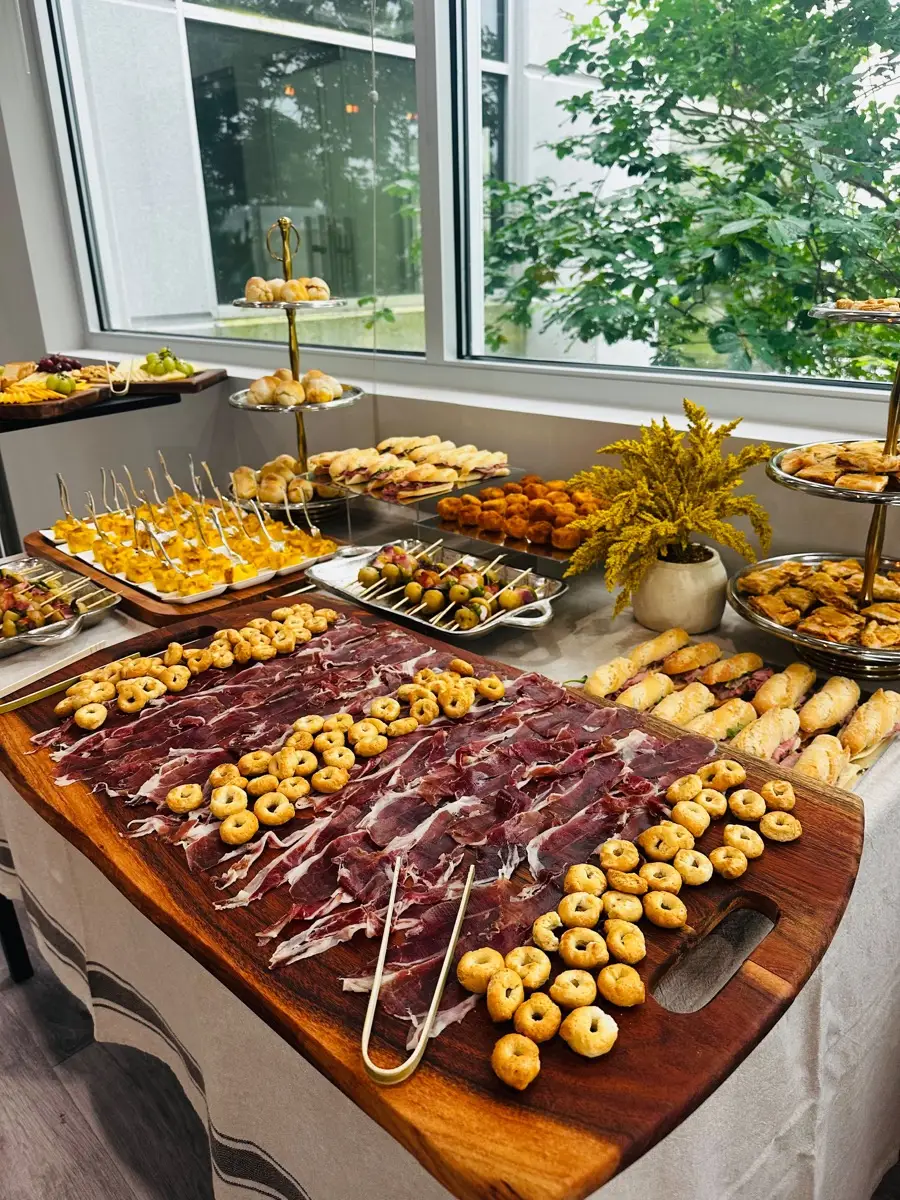
Tapas buffet catering spread at a Houston office lunch: jamón ibérico, tortilla española, and olive skewers

A three-tier stand of bollos preñaos, a board of hand-sliced jamón ibérico, tortilla española cut into cubes with a skewer through each — set out and staged before the first guest walks in. That is a tapas buffet. No plated courses, no seating chart, nobody waiting on a kitchen.

We are Cantábrico, two Spanish cooks catering events across Houston, and the tapas buffet is the format we get asked about most. This post shows what one actually looks like, using photos from two of our own recent events: a celebration in a private home and a company lunch at an office.
What is a tapas buffet?

A tapas buffet is a spread of Spanish small plates served all at once on a shared table, where guests serve themselves over the course of the event. Tapas are Spain's small-format dishes, eaten standing or seated, always shared — Spain's official tourism site describes going for tapas as tasting and exploring in good company, and that's the spirit a buffet brings indoors.

The difference from an American appetizer table is composition. A Spanish table balances embutidos like jamón and salchichón, cheeses like manchego, warm bites like croquetas and tortilla, skewered things like gildas, and bread that earns its place. Nothing needs a knife. Almost nothing needs a fork.

The difference from a seated dinner is movement. Guests circle back three, four, five times. Conversations change tables. In Spain, nobody eats alone and nobody watches the clock — the buffet is how that habit travels.

Tapas buffet or seated dinner — which fits your event?

Pick the buffet when the point of the event is the people mixing. Cocktail hours, milestone birthdays, office lunches, and welcome parties all move better when the food doesn't pin anyone to a chair. A tapas buffet feeds a room that wants to circulate.

Pick a seated, coursed meal when the point is the table itself — a wedding dinner with speeches, a small formal celebration where everyone stays put for two hours. We cook those too, and we'll tell you honestly when your event sounds like one.

The in-between answer is more common than people expect: a tapas buffet for the first hour, then paella cooked live as the single main. The buffet carries the mingling; the paella lands as the moment everyone gathers for.

How many tapas per person do you need?

We plan six to eight tapas per guest. That's the rule we quote events with: toward the lower end when the buffet opens for a main like live-cooked paella, toward the top when the buffet is the whole meal.

Variety matters more than volume. A table with six well-chosen tapas — one jamón, one cheese, one warm, one skewered, one vegetal, one bread — reads fuller and eats better than twelve trays of similar things.

What goes on the table

Our buffets are built from what we grew up eating, sourced the way we insist on: embutidos 100% imported from Spain, jamón 5J, cheeses that are Spanish without exception. The table usually carries:

  • A charcuterie board: jamón ibérico, salchichón ibérico, chorizo ibérico, with picos
  • Spanish cheeses: manchego, queso de cabra, queso de Mahón, with grapes and nuts
  • Warm bites: croquetas, empanadas, bollos preñaos — the Asturian bread rolls baked around chorizo
  • Tortilla española in skewered cubes, so it eats one-handed
  • Gildas — the Basque skewer of olive, anchovy, and piparra, a small green Basque pepper with a mild kick
  • Something from the sea when the event calls for it: pulpo a la gallega, served in individual boats

What we set out at a private home celebration

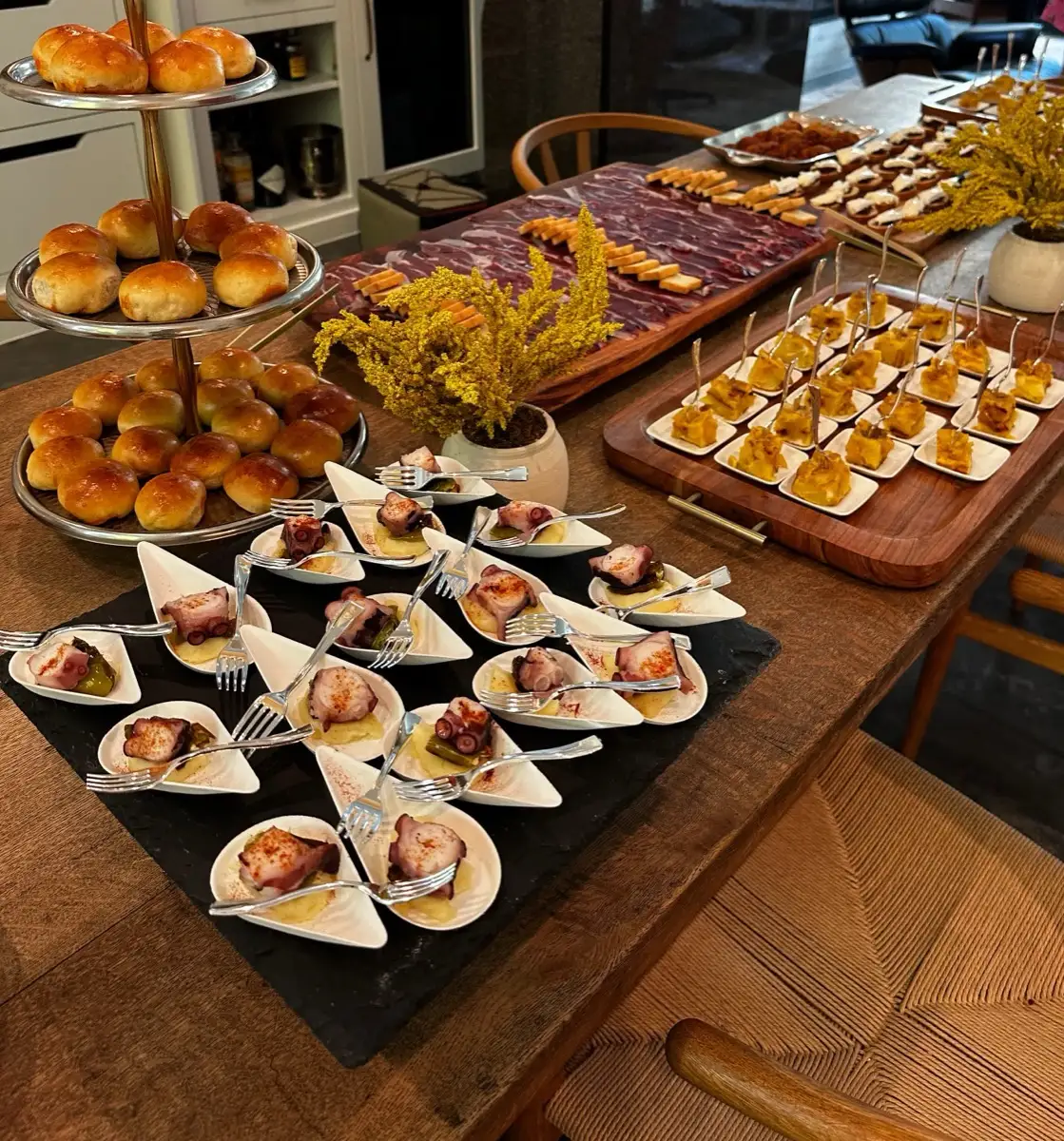
The photos below are from a home event in Houston this summer, for a client who has hired us several times. On the table: the bollos preñaos tower, a full board of jamón ibérico, tortilla española in cubes, and pulpo a la gallega — octopus over potato with olive oil and pimentón de la Vera — plated in individual boats with a fork already resting in each one.

Tapas buffet at a private home in Houston: bollos preñaos tower, pulpo a la gallega, and jamón ibérico

That last detail is the part we care about. A buffet only works if a guest can serve themselves in one motion, so we stage the room: the boards, the stands, the linens, the flowers when they belong. We're not a caterer who drops off boxes. We've catered 25+ events since 2024, from 12 guests at a dining table up to 60 across a backyard, and the staging is half of what people remember.

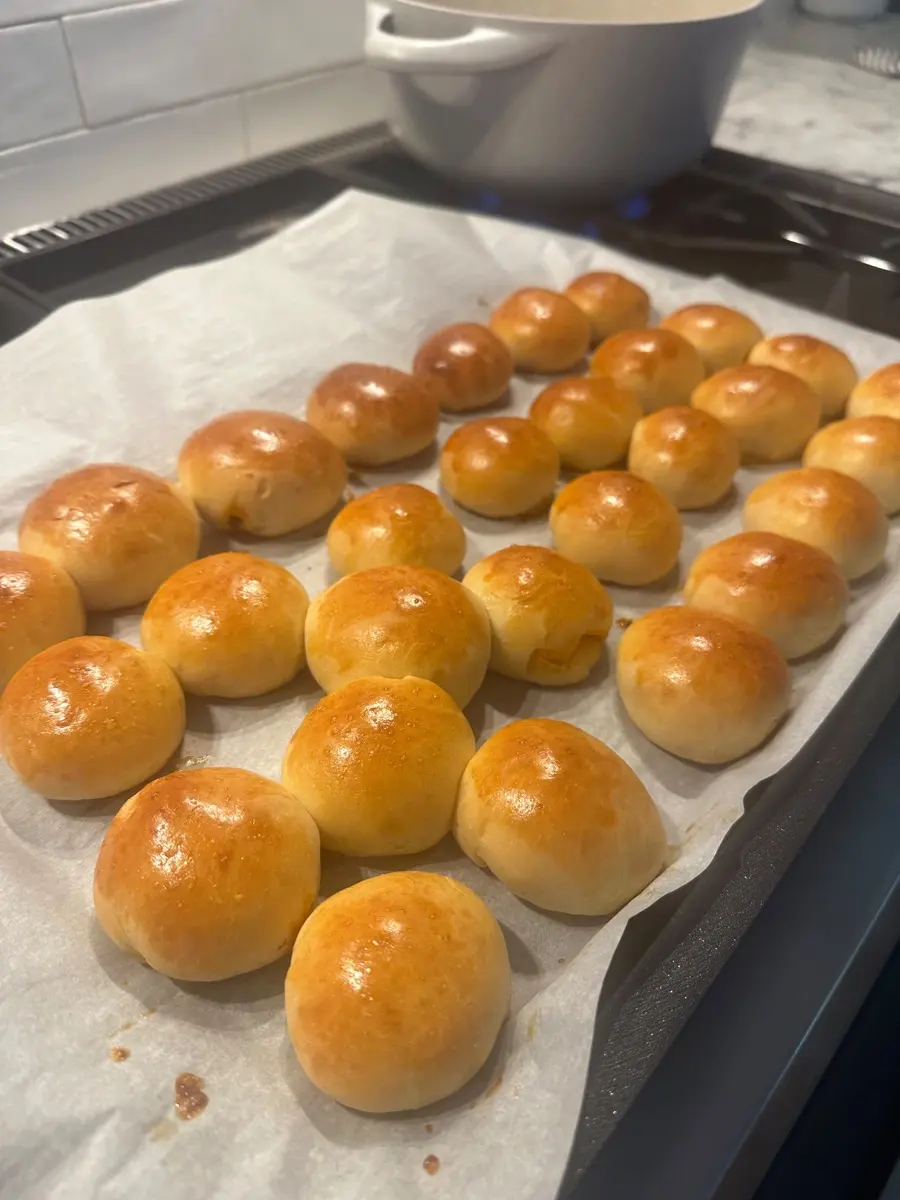
The host's kitchen stays ours for the evening. The bollos in the second photo came out of the oven right there, an hour before the tower was built.

Bollos preñaos fresh from the oven before a Houston catering event

What a tapas buffet looks like at an office lunch

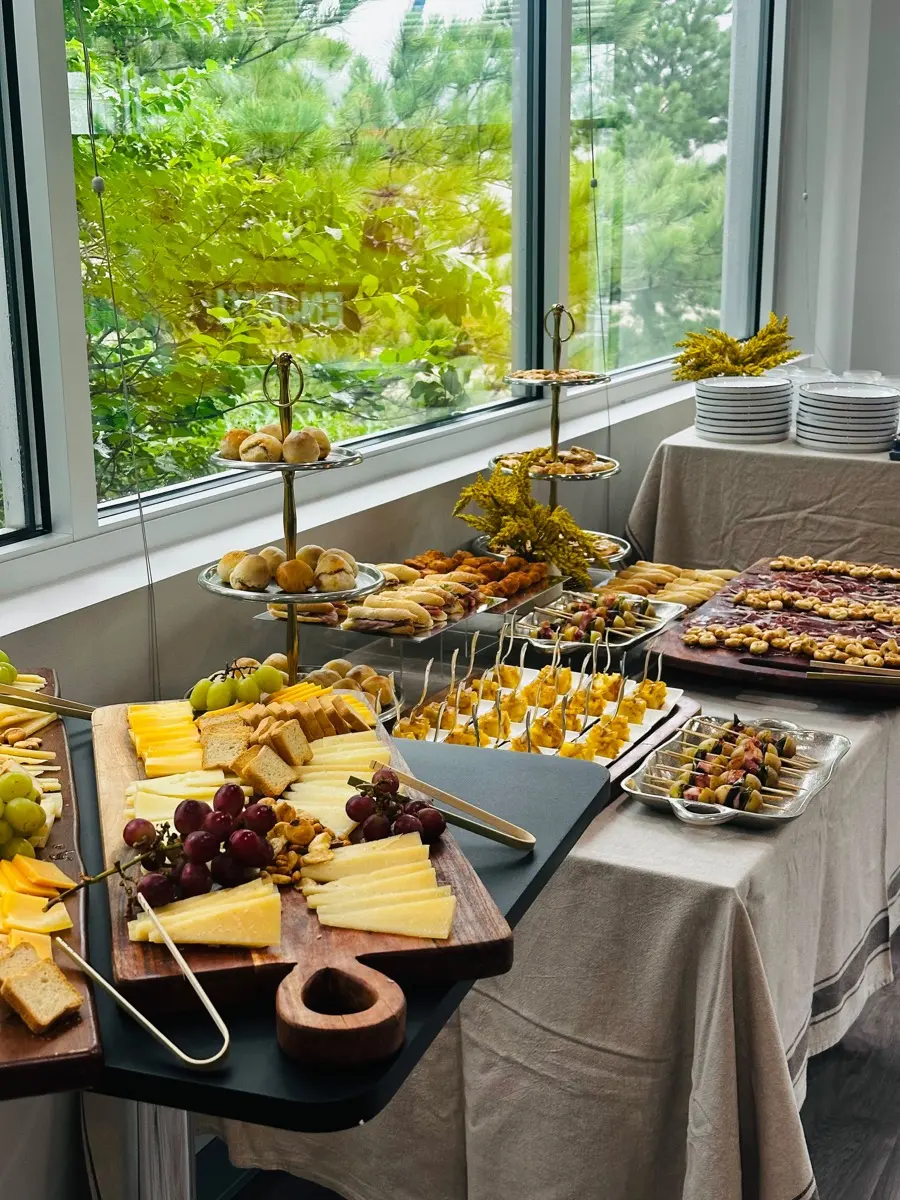
The second set of photos is a company lunch at a Houston office. Same idea, different room: cheese boards with manchego and grapes down one table, the jamón board with rosquilletas in the center, tortilla cubes and olive banderillas in rows, small bocadillos for the hands that want something familiar.

Hand-sliced jamón ibérico board with rosquilletas at a corporate event in Houston

Corporate menus get built the way all our menus do — around who's actually in the room. We once catered a 50th birthday for a mixed Spanish and Mexican-American crowd where the host wasn't sure what would land; we leaned into bold, vinegar-forward, anchovy-heavy bites, empanadas next to gildas, because we knew that palate from cooking for our own families. The pairing was the dish people kept returning for. An office lunch deserves that same reading of the room, not a default tray.

Spanish cheese boards with manchego and grapes at an office lunch in Houston

One practical note for anyone planning a long lunch: keep hot things rotating rather than sitting. The FDA's buffet food-safety guidance recommends small platters replaced often over big platters left out — which is how we serve anyway, because croquetas are only worth eating hot.

If your team is planning something like this, our Spanish tapas catering in Houston page covers how we work and what a typical spread includes.

When a tapas buffet isn't the right call

We're at our best when the host wants real Spanish food staged in their space — imported ingredients, time taken, the table built in the room. A formal seated dinner with synchronized courses is a different service, and a strict per-plate budget built on grocery-store pricing is a different category; there are caterers in town who do both well, and we'd rather point you to them than deliver a table that isn't ours.

Everything else — the home celebration, the office lunch, the backyard birthday where the tortilla disappears before you've plated it — that's exactly what we're for.

Frequently asked questions

How many tapas per person for a buffet?

Plan on six to eight tapas per person — lower when the buffet precedes a main course, higher when it is the meal. When we quote an event, the exact count is part of the proposal, sized to your guest list and hours.

Is a tapas buffet served hot or cold?

Both, at the same time. Embutidos, cheeses, and gildas hold at room temperature; croquetas, tortilla, and bollos preñaos come out warm and get replaced in small batches so nothing sits. That rhythm is standard practice in Spain and matches U.S. food-safety guidance for buffets.

Does a tapas buffet work for a corporate lunch?

Yes — it's one of the formats we're hired for most in Houston. A tapas buffet feeds a mixed team, needs no seating plan, and fits a one-hour lunch window because everything is ready when the room walks in.

How far in advance should we book tapas buffet catering?

We recommend booking at least 2 weeks ahead — 4 weeks is ideal. For events less than 2 weeks away, call us and we'll see what's possible.

What's the difference between a tapas buffet and a grazing table?

A grazing table is a single continuous landscape of food, mostly cold, built for visual effect. A tapas buffet is organized by dish — each tapa plated its own way, warm items in rotation, the composition Spanish rather than decorative. Ours lean tapas buffet: real dishes with names, not a spread.

Can a tapas buffet handle dietary restrictions?

Yes. Spanish food has a deep vegetarian bench — tortilla española, pan con tomate, padrón peppers, marinated olives, cheeses — and we flag anything with anchovy or gluten on the table cards. Tell us the restrictions in your inquiry and the menu is built around them.

Most of the people who reach out to us aren't comparing caterers dish by dish. They're picking the night they want their guests to remember. If a table like the ones above is what you have in mind, let's talk.