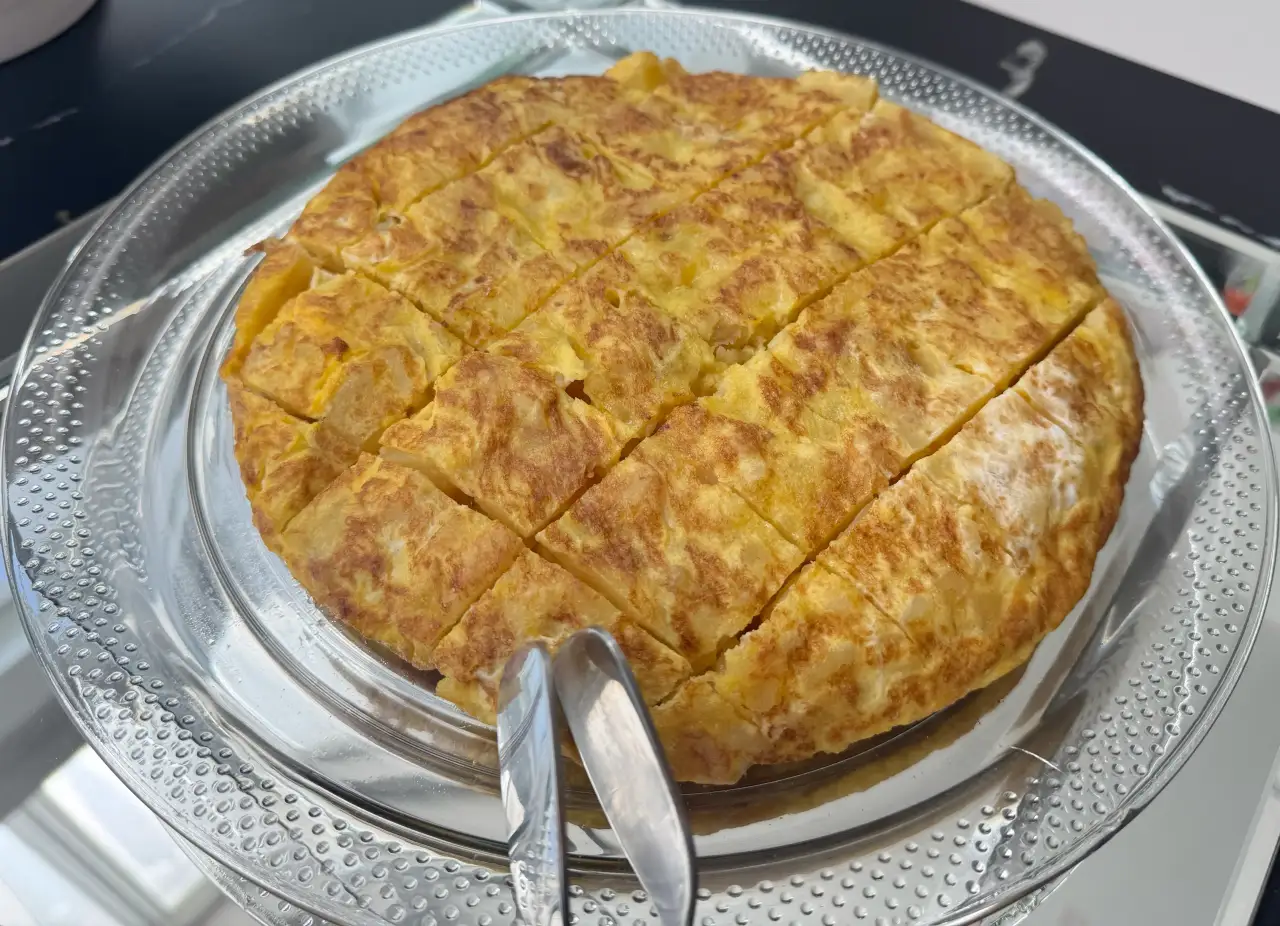
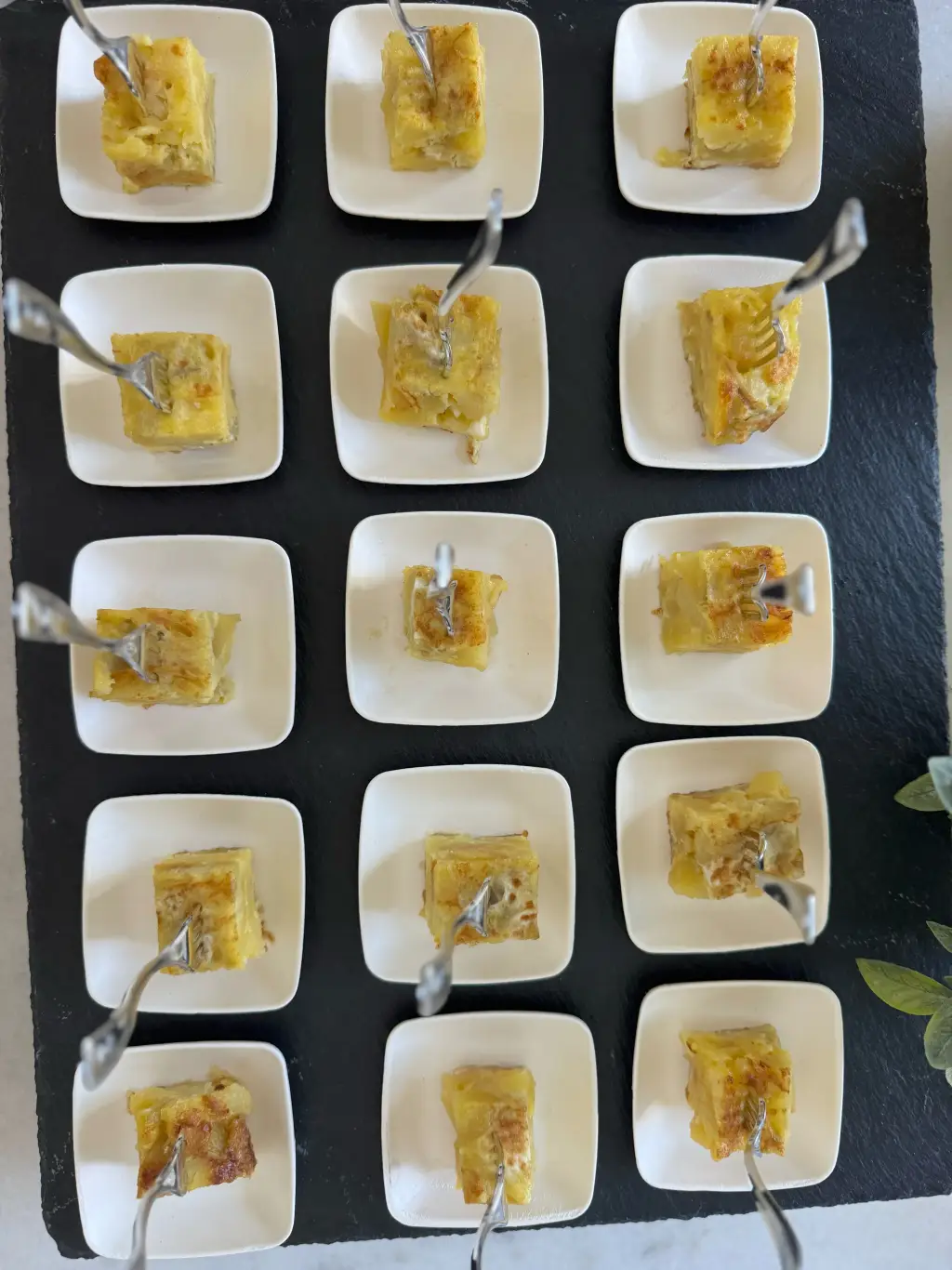
If you ever want to derail a Spanish dinner table for forty minutes, ask whether a tortilla should be jugosa (runny, with the middle still slightly liquid) or cuajada (fully set, no liquid). It is the dish's defining argument, and it is unresolvable. Both sides have champions. Both sides have grandmothers. Both sides have cookbooks. The debate plays out in every Spanish kitchen, in every bar, on every cooking show.
Here's the simplified shape of it:
The jugosa camp says: the tortilla is a custard delivery system. The egg should set just enough to hold the shape, but the center should be wet enough to almost spill when you cut a wedge. The potatoes should taste like potatoes, not like a baked binder. A jugosa tortilla served on bread is a meal in itself — the bread soaks up what the eggs didn't quite set, and that is the moment the dish was made for. Anyone over-cooking a tortilla is, in this view, simply afraid of eggs.
The cuajada camp says: a tortilla is a dish you serve to other people, including kids, including older relatives, including anyone who has reasonable concerns about under-cooked eggs. A fully-set tortilla is the safer, sturdier, more travel-ready version. You can cut it into squares, stack it, pack it, take it on a hike, put it in a sandwich. The cuajada tortilla is the workhorse of Spanish daily life. Anyone insisting on jugosa is, in this view, being precious.
We lean jugosa, with caveats. Most of our event clients want the center soft enough to taste like eggs and not like a casserole. When we cater a wedding or a corporate dinner where everyone's eating in the same room within the same hour, jugosa works — the center is still warm when it lands on the plate, and the texture is the texture. For events where pieces need to sit out on a buffet for two hours, we cuajada slightly more so the slices hold up.
There's no correct answer. There's only the answer that fits the room. The honest move is to ask whoever you're cooking for which side they're on, and then commit.